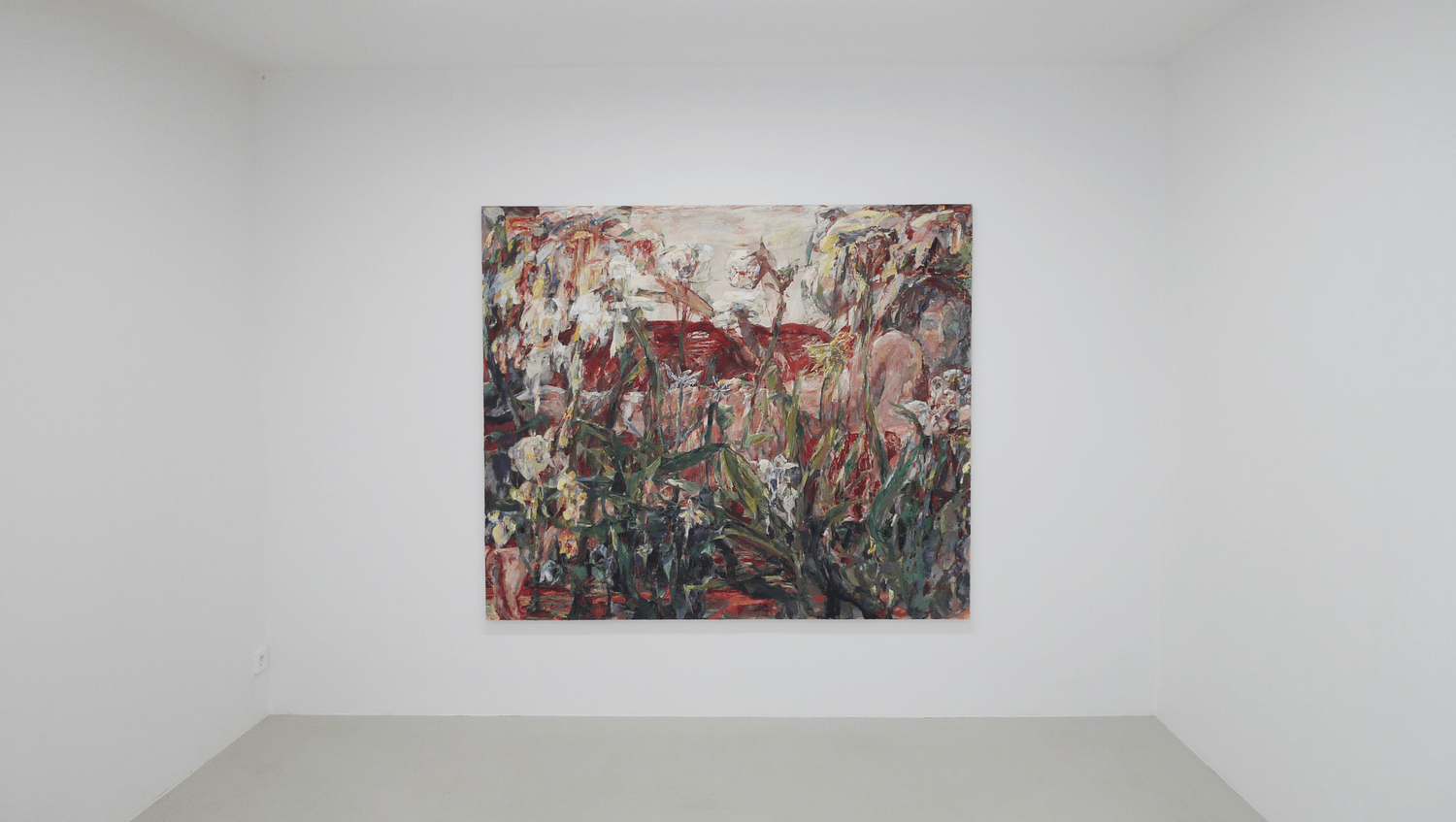
해질녘 Sunset, 176x150cm, acrylic on canvas, 2026
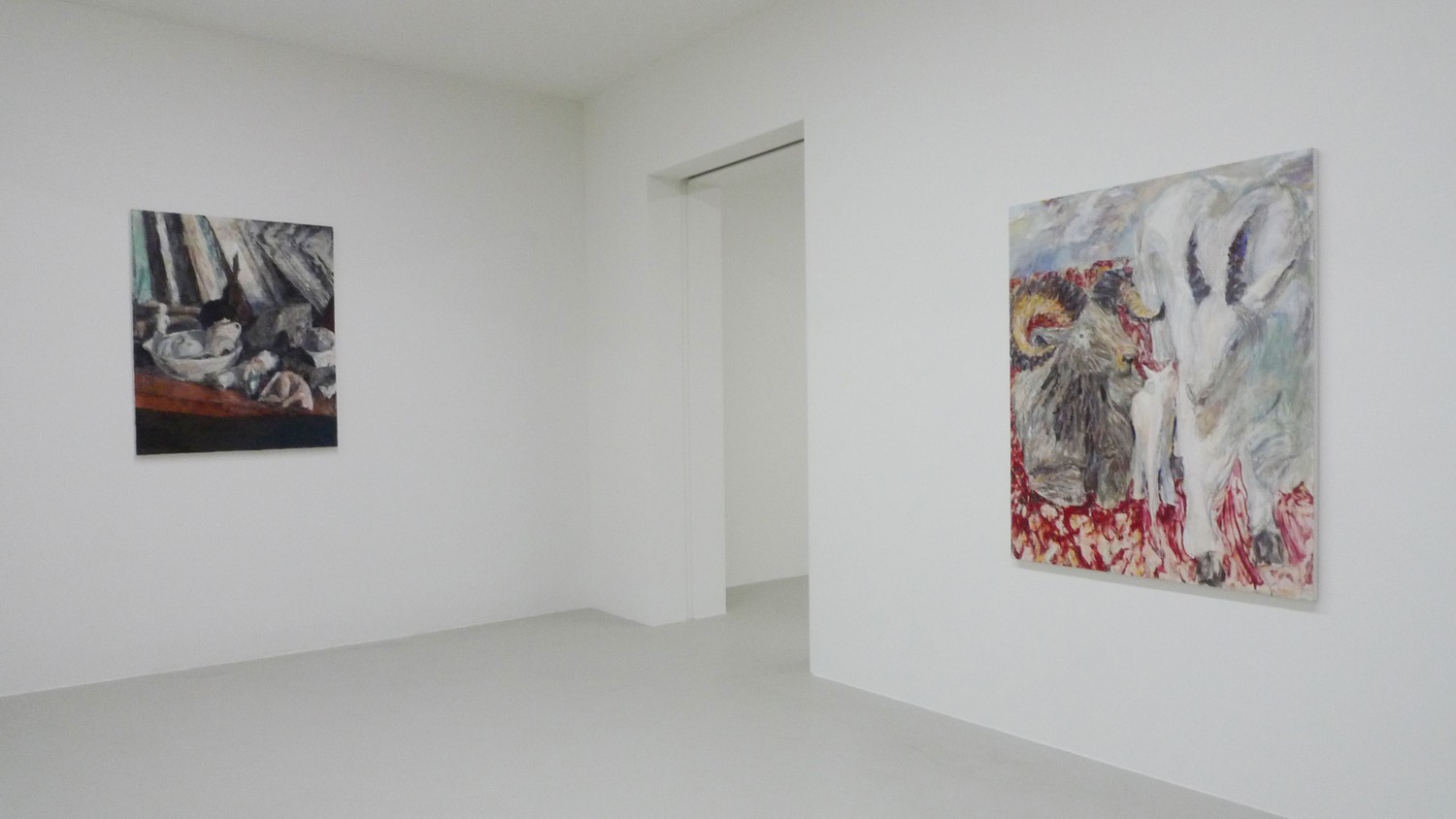
P1020213.JPG
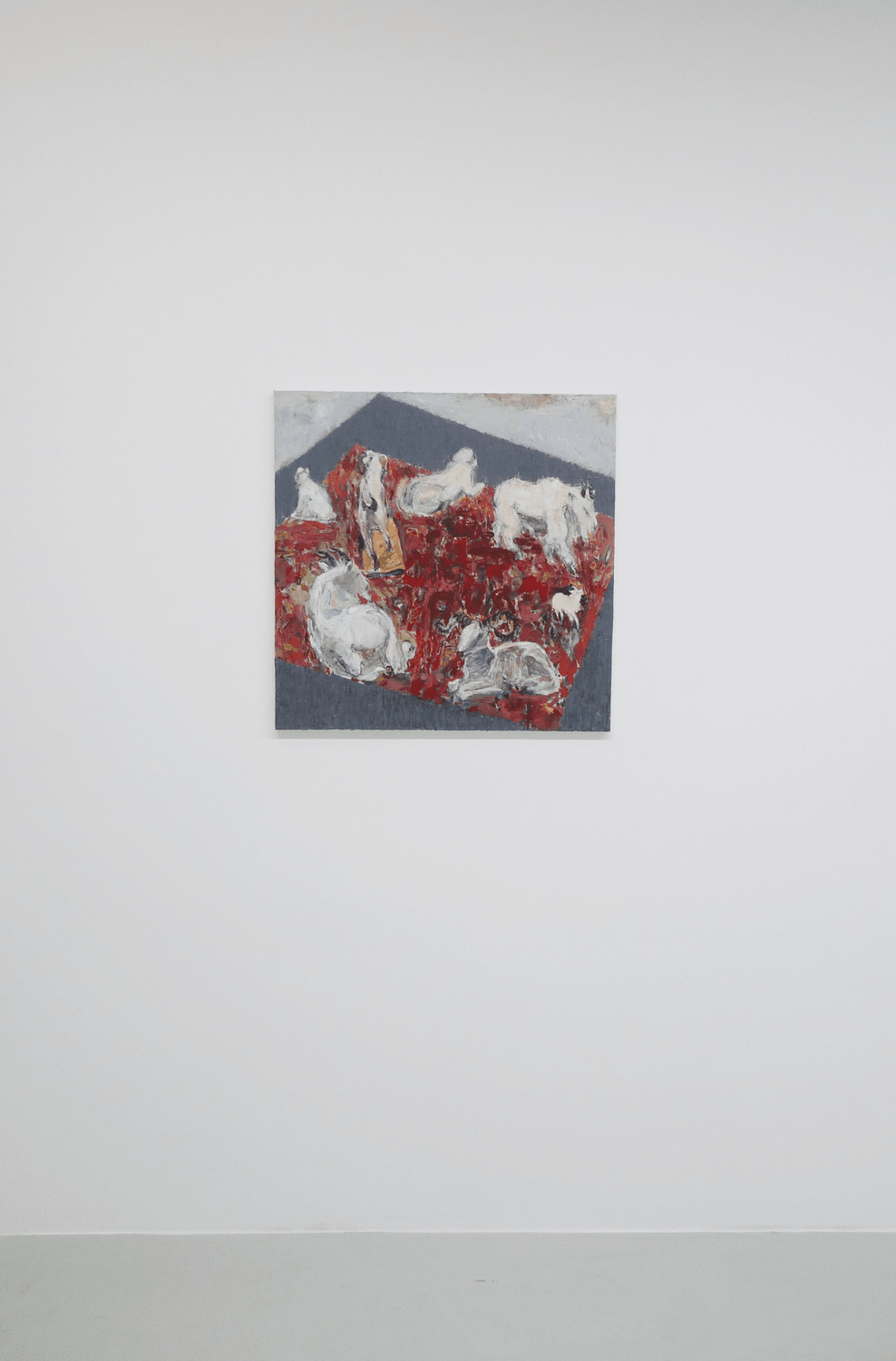
양탄자 위의 인형들 Dolls on Carpet, 60.6x60.6cm, acrylic on canvas, 2025
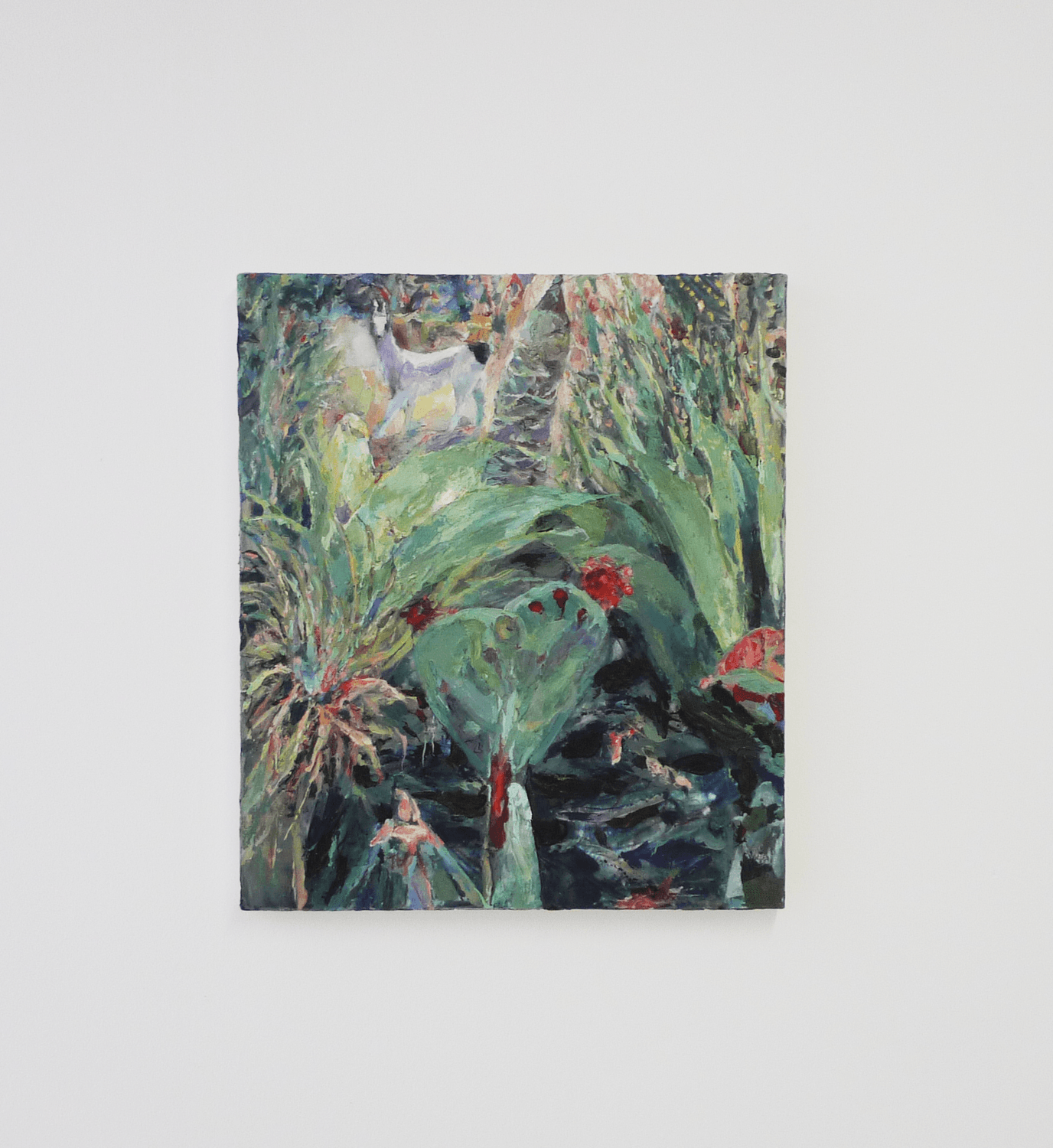
밤의 식물원 Botanical Garden at Night, 45.5x53cm, acrylic on canvas, 2025
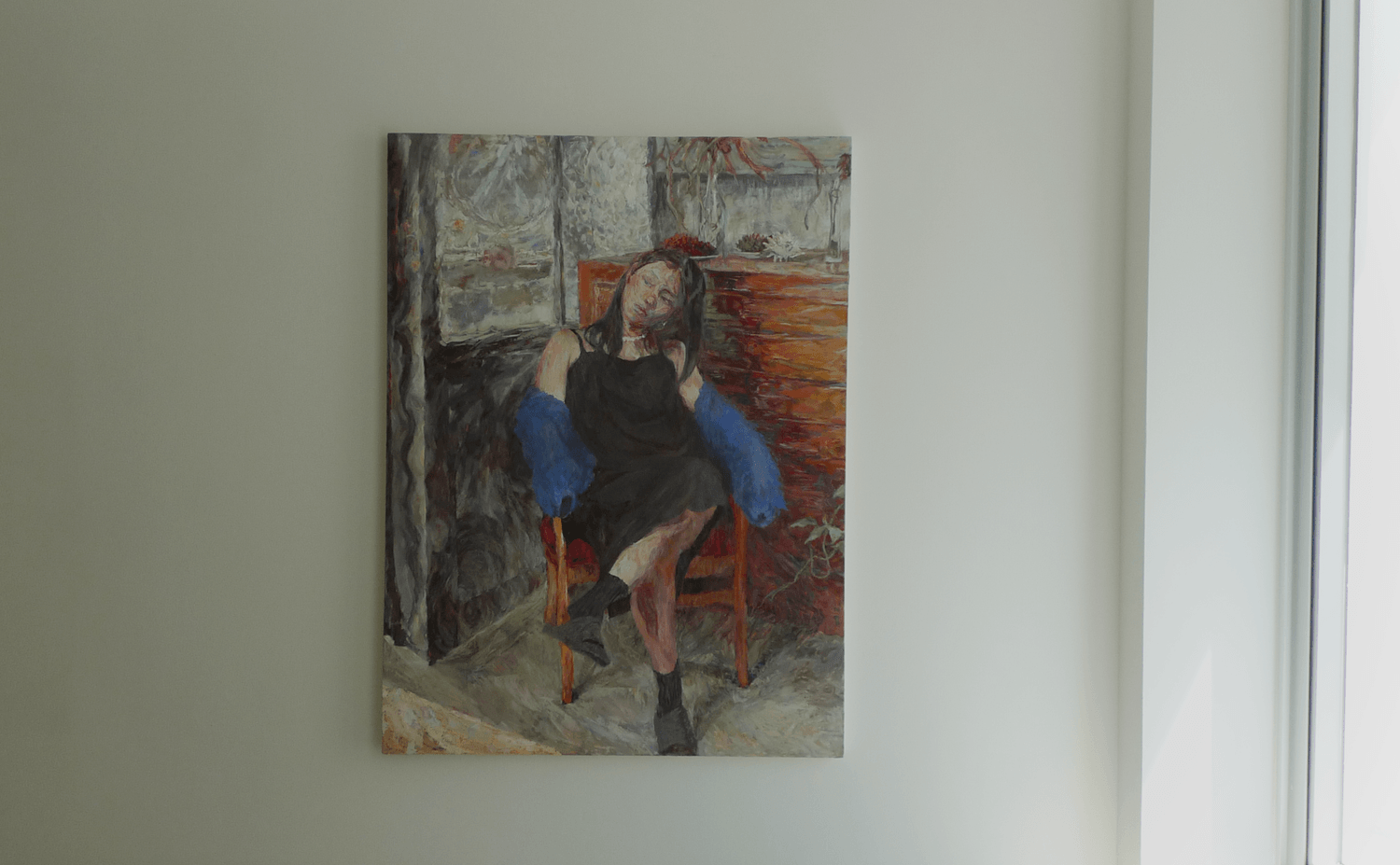
의자에 앉은 여인 Woman in a Armchair, 97x130.3cm, oil on canvas, 2025
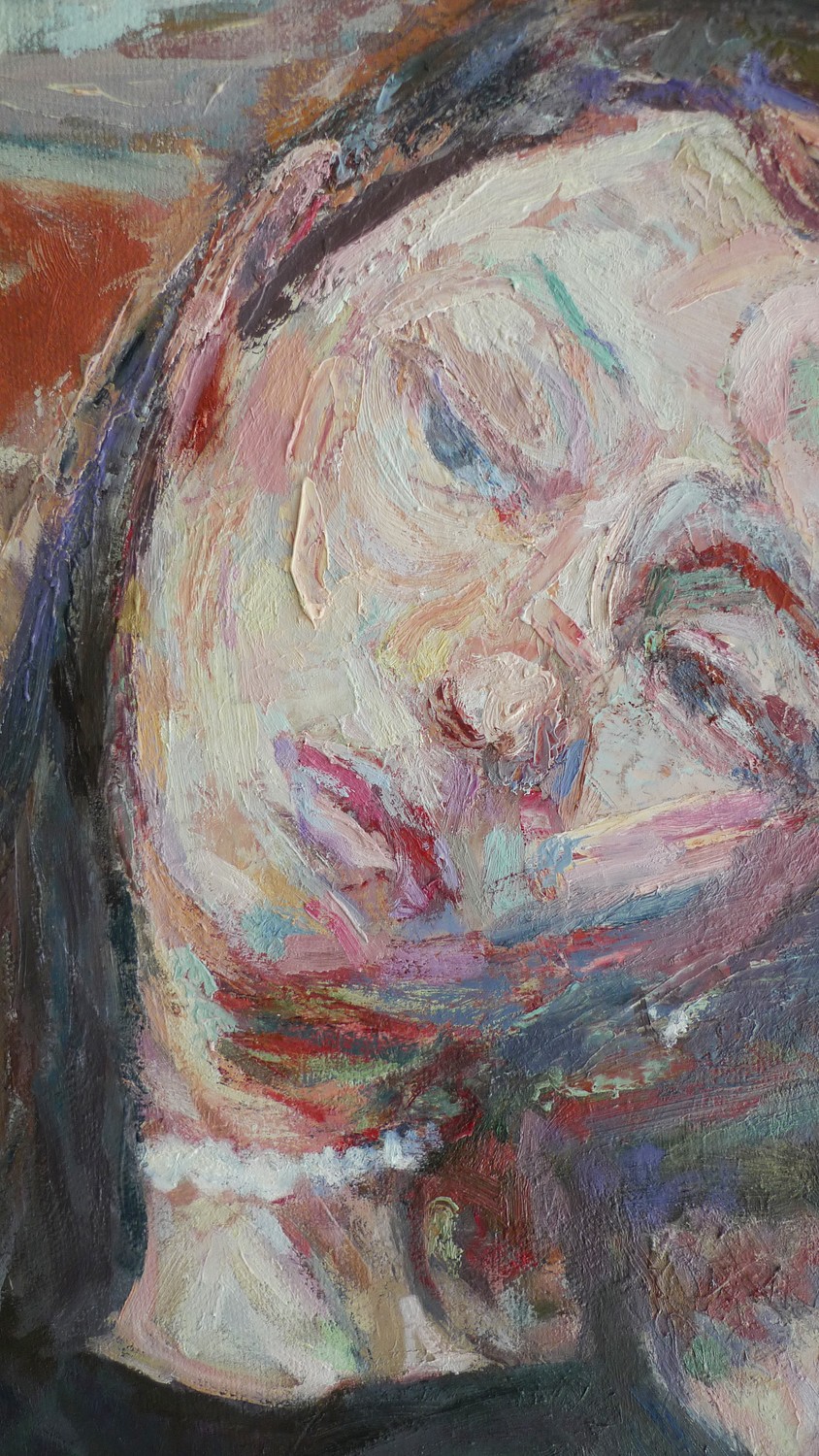
close up
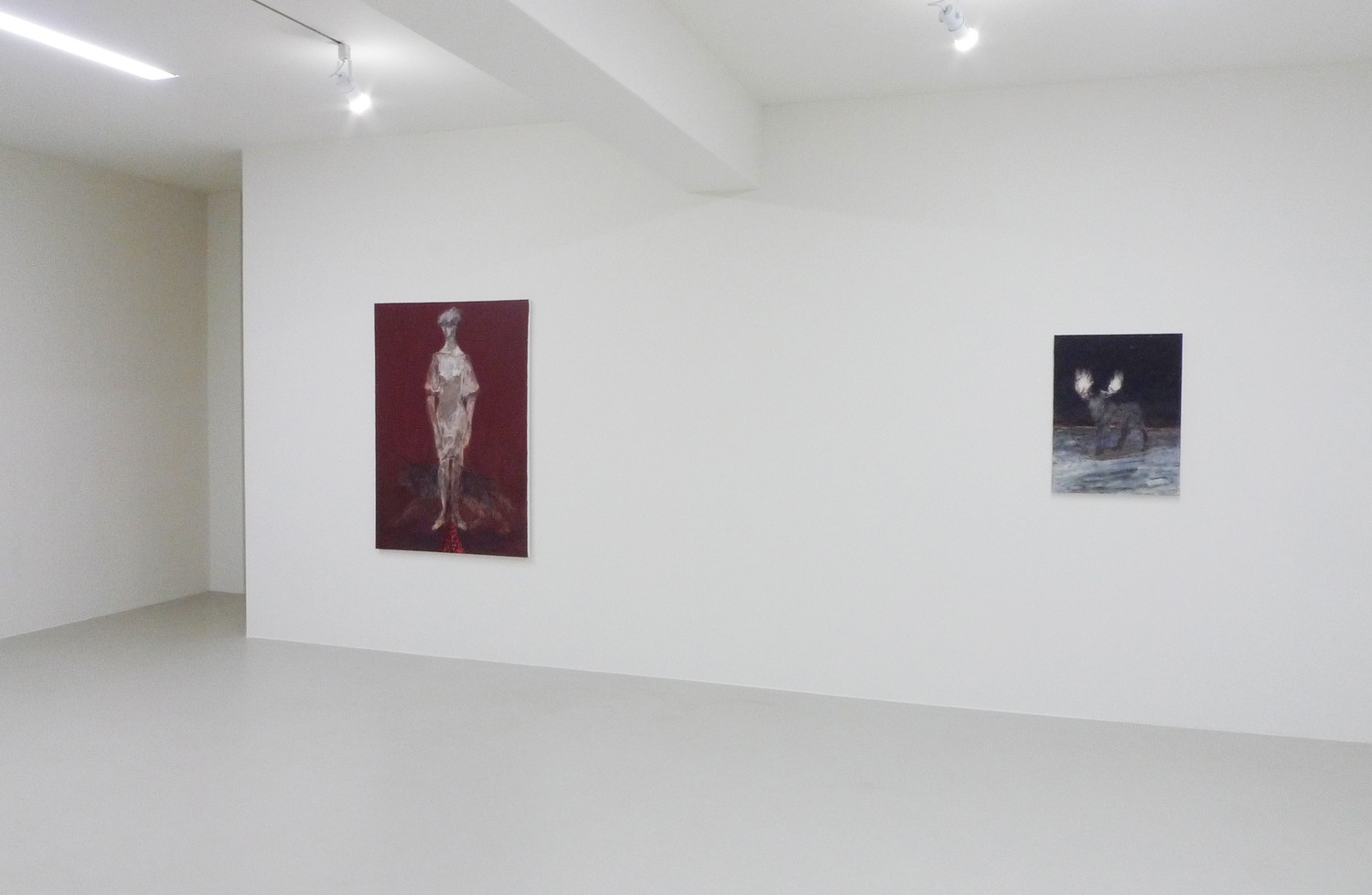
installation view
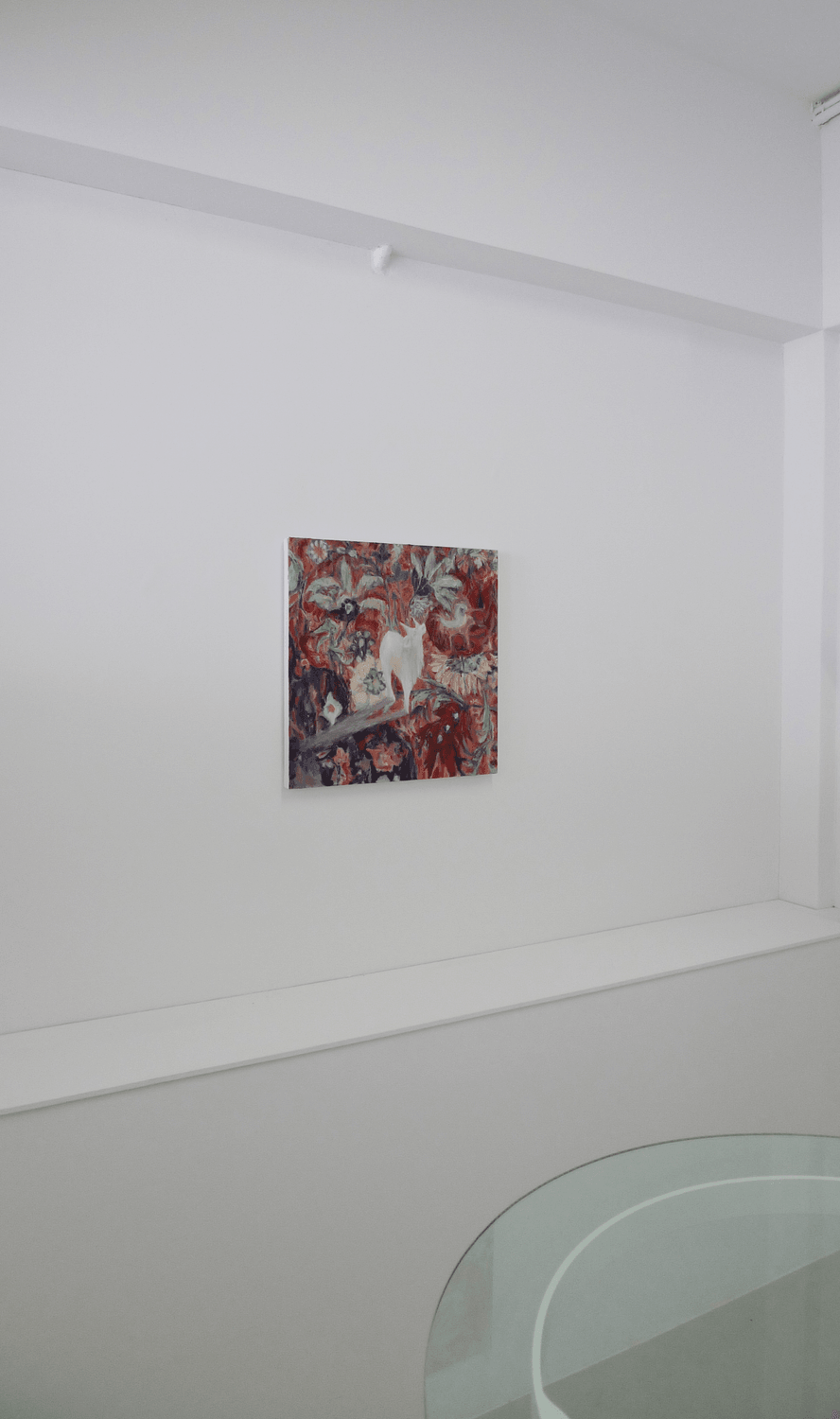
양탄자 위의 인형 Doll on Carpet, 45.5x45.5cm, oil on canvas, 2025
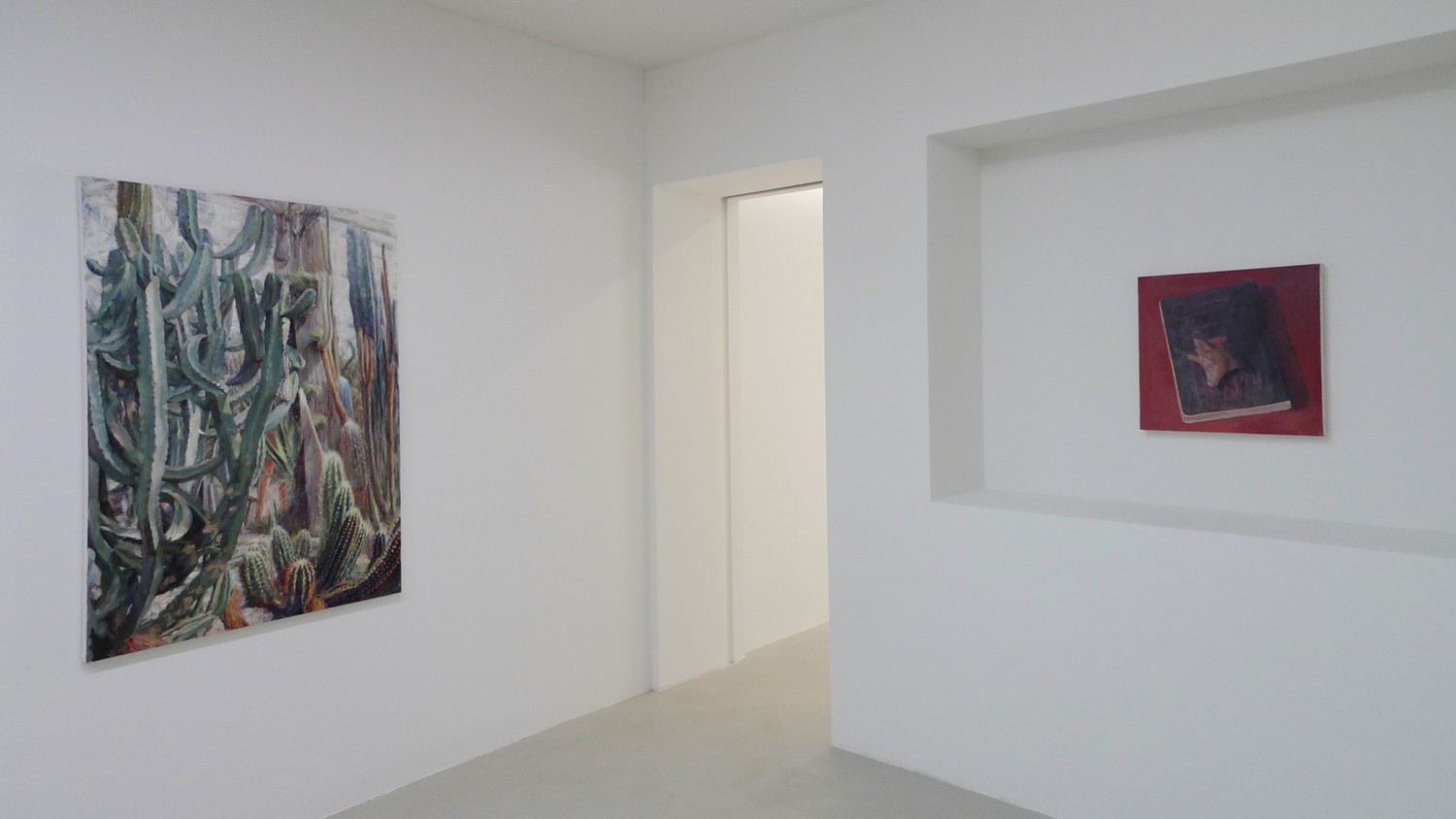
installation view
오늘날 예술 영역에 있어서 ‘회화’는 매우 클래식한 장르다. 아마도 인류 역사에서 가장
오랜 시간 동안 스스로를 표현하는 수단으로서 다듬어져 온 분야라고 해도 무방할 것이다.
실재 세계를 감각하고 수용하는 방식은 모두가 다르고, 또 그것을 자신에게 가장 적합하고
알맞은 방식으로 재구성하여 표현하고 싶어 하기에 오랜 역사만큼이나 다양한 표현 방식을
가지고 있다. 그렇기에 그림을 감상한다는 것은 다소 복잡하면서도 어렵게 느껴지는 것이
사실이다.
꽤 오랜 시간 2차원의 평면 위에 자신의 세계를 구축해 온 지효섭 작가의 그림을 대할 때도
마찬가지로 그런 느낌이다. 어지럽게 화면을 채우는 풀숲이나 식물들 사이로 내비치는
흐릿한 여성의 실루엣, 알 수 없는 시공간에 놓여진 일부분이 깨져 나간 오브제들은 작가의
화면을 이루는 주된 요소들이다. 또한 바탕이 되는 깊고 어두운 색감과 대비를 이루는 빛의
색깔들은 겹겹의 세밀한 레이어를 만들면서 화면의 지배적 요소들을 조용히 떠받치고 있다.
이렇게 구성된 화면은 낯설게 느껴지면서도 강력한 내러티브를 갖는 것처럼 보여진다.
춤추듯 펼쳐지는 붓질의 향연들에 넋을 놓고 바라보다 보면 문득, 이것은 어쩌면 작가의
‘트릭’일지도 모른다는 생각이 든다.
아무것도 그려지지 않은 새하얀 캔버스를 마주하고 한참 동안 바라보다 보면 거기에
무엇인가를 그려 넣고 싶어질 것이다. 단 하나의 아주 심플한 '선'을 그린다 해도 거기에는
무엇인가가 담긴다. 한순간도 멈추지 않고 우리의 뇌는 감각한 모든 것들을 의도적으로
선택하고 재구성하기 때문이다. 그것은 무엇인가를 드러내는 동시에 감춘다. 드러내고 싶은
욕망과 숨기고 싶은 욕망은 동전의 양면처럼 늘 함께한다. 감각된 것들은 어떤 종류의 변형
과정을 거치면서 사각의 평면 위에 남겨진다. 현실에서는 허용되지 않은 생각, 선택하지
못한 행동, 끝내 드러내지 않기로 한 마음 등. 어떤 과정들을 통과하는지 구체적으로 알 수는
없지만 거기에는 무수한 물리적 힘들의 작용과 시간들이 축적된다.
그렇게 완결된 화면이 누군가의 시선을 붙잡고 뇌리에 새겨진다는 것은 분명 놀라운 일이다.
무엇에 매혹된 것일까? 빈 캔버스를 채우는 ‘예술적 재현’이란 무엇은 드러내고 무엇인가는
감추는 의도적 기술에 가깝다. 현실에서 누락시킨 자신의 파편들을 잘 가려 두고 안전하게
바라볼 수 있도록 만든 ‘베일’ 같은 것이다. 그 베일 덕분에 누락된 자신의 조각들은
유지되고 보존된다. 작품은 읽혀지기를, 이해되기를 바라지 않는다. 동시에 그림을 감상하는
행위는 매우 흥미롭게도 그림과 감상자 사이에서 일어나는 저항과 공명, 그 사이 어디쯤에서
벌어지는 치열한 숨바꼭질처럼 느껴진다.
이 메커니즘에 대해 다양하면서도 깊게 생각해 볼 거리를 제공해주는 대상으로서 회화
작품은 그렇게 자신의 수수께끼에 대해 스스로 함구한 채 이질적이고 낯선 하나의 오브제로
남는다. 그리고 그 앞에서 끊임없이 바라보게 하고, 묻게 하고, 생각하게 하고, 꿈을 꾸게
한다.
(ENG)
Today, within the field of art, painting remains a profoundly classical genre. It would not be an exaggeration to say that it is one of the forms through which humanity has, over the longest span of time, refined its means of self-expression.
Each of us senses and receives the real world differently. We also desire to reconstruct and express it in the way that feels most fitting, most natural to ourselves. Perhaps for this reason, painting has developed as many modes of expression as its long history would suggest. And so, looking at a painting can often feel somewhat complex, even difficult.
One encounters a similar sensation when faced with the work of Ji Hyo Sup, an artist who has spent a considerable period of time building his own world upon the two-dimensional plane. Dense thickets and plants that fill the picture surface almost chaotically; the faint silhouette of a woman glimpsed between them; fragmented objects, partially broken, placed within an unknowable time and space—these are among the primary elements that make up his paintings. At the same time, the colours of light, set against deep and dark grounds, create delicate layers upon layers, quietly supporting the dominant elements of the image.
The resulting scenes feel unfamiliar, yet they also appear to possess a powerful narrative force. As one finds oneself absorbed in the dancing profusion of brushstrokes, it suddenly occurs that this may, perhaps, be the artist’s “trick”.
If one were to stand before a blank white canvas and look at it for a long while, one would likely begin to feel the urge to draw something onto it. Even a single, very simple line would already contain something. This is because our brains never cease, not even for a moment, to select and reconstruct everything we sense. Such an act reveals something, while at the same time concealing something else. The desire to reveal and the desire to hide always exist together, like two sides of the same coin. What has been sensed is left upon the rectangular plane after passing through certain processes of transformation: thoughts that could not be permitted in reality, actions that were never chosen, feelings that were ultimately never disclosed. We cannot know exactly what processes they pass through, but what accumulates there is the action of countless physical forces, and of time itself.
That such a completed image can seize someone’s gaze and remain imprinted in the mind is, without doubt, remarkable. What is it that captivates us? “Artistic representation”, which fills the empty canvas, is closer to an intentional technique of revealing certain things while concealing others. It is like a veil, one that allows fragments of the self omitted from reality to be carefully hidden away, and then safely looked at. Thanks to this veil, those missing fragments of the self are preserved and sustained.
The work does not ask to be read, nor does it ask to be understood. At the same time, the act of looking at a painting feels, quite intriguingly, like an intense game of hide-and-seek taking place somewhere between resistance and resonance, between the painting and the viewer.
As something that offers us varied and profound ways of thinking about this mechanism, painting remains, in the end, an alien and unfamiliar object—silently withholding the answer to its own riddle. And before it, we continue to look, to ask, to think, and to dream.